


Quick Answer: Motorized screens help Colorado homeowners reduce wind, block UV exposure, improve privacy, minimize insects, and extend the usability of outdoor living spaces throughout much of the year.
If you’ve invested in a beautiful deck, pergola, or covered patio on the Colorado Front Range, you already know the feeling: you step outside on a gorgeous afternoon, ready to relax or entertain, and within minutes the wind picks up, the sun shifts into your eyes, or the bugs arrive. Colorado’s outdoor living season is remarkable — but it also comes with conditions that can cut a perfect evening short.
Motorized retractable screens have become one of the most practical upgrades Colorado homeowners are making to their outdoor spaces, and for good reason. This guide covers what you need to know before investing, how these systems actually perform in Colorado’s unique climate, and what to look for in a quality installation.
The Real Challenges of Outdoor Living on the Colorado Front Range
Colorado has exceptional outdoor weather. But “exceptional” cuts both ways.
Communities along the Front Range — including Castle Rock, Monument, Black Forest, Falcon, Parker, Castle Pines, Peyton, Highlands Ranch, Centennial, and Colorado Springs — experience a climate unlike most of the country. Summers bring intense UV radiation at elevation, afternoon thunderstorms that materialize in minutes, and temperature swings that can drop 20 degrees before dinner is over. Spring and fall deliver strong sustained winds, particularly along the Palmer Divide corridor between Castle Rock and Colorado Springs. And shoulder seasons — those beautiful October afternoons or warm March days — often go unused simply because there’s no good way to block a biting wind or keep the patio comfortable.
Standard fixed screens or open pergola designs handle some of these challenges but not all of them. What most Colorado homeowners actually need is flexibility: full openness on calm, clear days and meaningful protection when conditions change.
Common Complaints From Colorado Patio Owners
- Afternoon winds that blow furniture, scatter napkins, and make conversation difficult
- Intense western sun that creates harsh glare and uncomfortable heat on covered patios
- Mosquitoes and wasps that move in during summer evenings
- Privacy concerns from neighboring lots, especially on smaller or newer developments
- An outdoor season that feels shorter than it should because of manageable but unaddressed conditions
Each of these problems has a solution — and motorized screens address all of them in a single system.
How Motorized Screens Extend Your Outdoor Living Season
The fundamental value of a quality motorized screen system is that it transforms a partially usable outdoor space into a genuinely functional one across more months of the year.
Here’s a practical example: a homeowner in Castle Pines with a composite deck and louvered pergola might currently use that space comfortably from late May through early September — roughly four months. Add motorized screens, and that same space becomes usable during warm days in March and April, extends comfortably through October, and even supports occasional use in November when the sun is out and the wind is calm. That’s potentially six to eight months of real outdoor living rather than four.
The screens themselves don’t generate heat or create weather — but they do change how your body experiences existing conditions. Blocking wind reduces perceived temperature dramatically. Filtering UV radiation makes a sunlit patio comfortable rather than punishing. Keeping insects out means you’re not swatting through dinner. These are practical quality-of-life improvements with a direct impact on how often you actually use the space you’ve built.
Beyond comfort, motorized screens also provide a meaningful barrier for solar heat gain. A solar screen fabric can block a significant portion of the sun’s heat before it reaches your patio furniture, flooring, or the people sitting there — which matters considerably at Colorado elevations where UV intensity is higher than most homeowners expect.
Why MagnaTrack Screens Are the Right Choice for Colorado Conditions
Not all motorized screen systems perform equally in Colorado’s environment. Wind, temperature variation, and UV exposure create conditions that can wear out lesser systems quickly.
Alta Outdoor Living installs MagnaTrack motorized screens — a system built specifically to handle demanding outdoor conditions with minimal maintenance.
Patented Self-Tensioning Technology
The single most important technical differentiator in MagnaTrack screens is their patented magnetic self-tensioning system. Most competing motorized screens use zipper-track or spring-based designs that can jam, snag, or come off-track — particularly in windy conditions. When that happens, you need a service call.
MagnaTrack’s design uses rare earth neodymium magnets running throughout the screen track, which keep the screen properly seated even when wind pressure pushes against it. If the screen does shift, it automatically corrects itself rather than requiring manual intervention or a technician visit. This matters in Colorado, where afternoon gusts on a patio aren’t unusual.
Wind-Rated Performance
MagnaTrack screens are rated to handle significant wind loads. For homeowners in areas like Monument, Falcon, or along the Palmer Divide where sustained winds and gusts are part of the seasonal reality, this isn’t a minor feature — it’s essential. A screen system that has to be retracted every time the wind picks up doesn’t actually solve the problem you bought it to solve.
UV and Solar Protection Options
Colorado sits at a mile or more above sea level across most of the Front Range. UV radiation at elevation is measurably more intense than at sea level, and cumulative sun exposure on patio surfaces, furnishings, and people adds up quickly. MagnaTrack offers solar screen fabric options that filter UV radiation while maintaining airflow and outward visibility — a meaningful combination for Colorado summers.
Smart Home Integration and Automation
MagnaTrack screens can be operated by remote control, smartphone app, or integrated with home automation systems. For Colorado homeowners who want their screens to respond automatically to changing conditions, wind and rain sensors can be paired with the system to trigger automatic retraction before a storm hits or deployment when afternoon winds pick up. This kind of hands-free protection is particularly practical for second homes, vacation properties, or busy households.
Durable Construction for Colorado’s Freeze-Thaw Cycles
Powder-coated aluminum hardware and stainless steel components mean the system doesn’t rust, peel, or degrade in Colorado’s climate, which cycles through temperature extremes, high humidity during monsoon season, and hard freezes in winter. The screen fabrics are designed for long-term UV resistance as well — important given Colorado’s sun intensity.
Combining Motorized Screens With Pergolas and Outdoor Living Spaces
Motorized screens work best as part of an integrated outdoor living design rather than as an afterthought. When a pergola, deck, or covered patio is designed from the start to accommodate screens, the result is cleaner, more functional, and better looking.
Pergolas and Motorized Screens
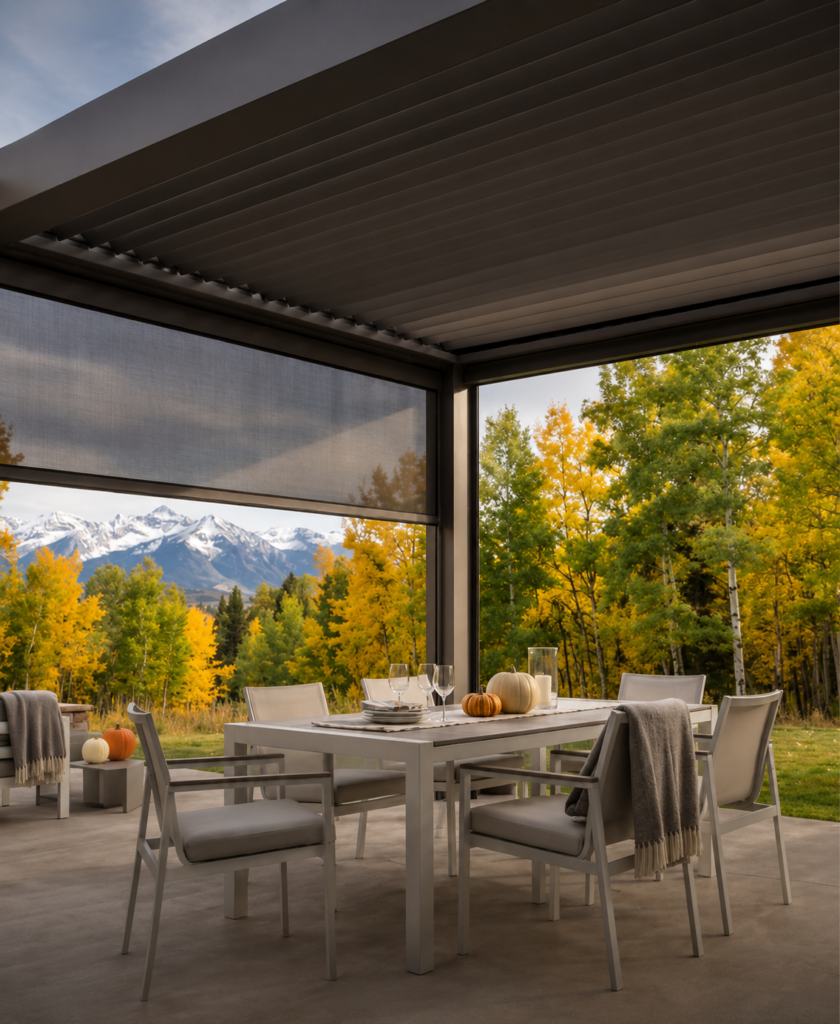
A motorized louvered pergola — such as the Azenco R-Blade or R-Breeze systems that Alta Outdoor Living installs — already provides overhead protection from sun and rain. Adding MagnaTrack screens to the sides of that structure creates an enclosure that’s genuinely four-season capable. The roof adjusts to let in light or block rain. The screens manage wind, insects, and privacy at the perimeter. The result is something between an outdoor patio and a screened room — open and airy when you want it, protected when you need it.
This combination is particularly effective in Colorado because it addresses the full range of weather variables: overhead coverage for afternoon thunderstorms and hail, screen protection for wind and insects, and the flexibility to open everything up on perfect days.
Covered Patios and Decks
For existing covered patios or decks, motorized screens can often be retrofitted into the structure depending on the framing and clearances available. Alta Outdoor Living evaluates each project individually to determine the best approach — whether that’s a clean recessed installation inside the structure or a surface-mounted system that’s still aesthetically refined.
Commercial and Multi-Use Applications
Motorized screens aren’t limited to residential spaces. Restaurants with covered patios, breweries with outdoor seating, and commercial properties with outdoor common areas are all candidates for screen systems that allow year-round use. The economics are straightforward: a commercial outdoor space that’s usable all year round rather than five or six generates more revenue and serves more guests.
What Colorado Homeowners Should Consider Before Buying
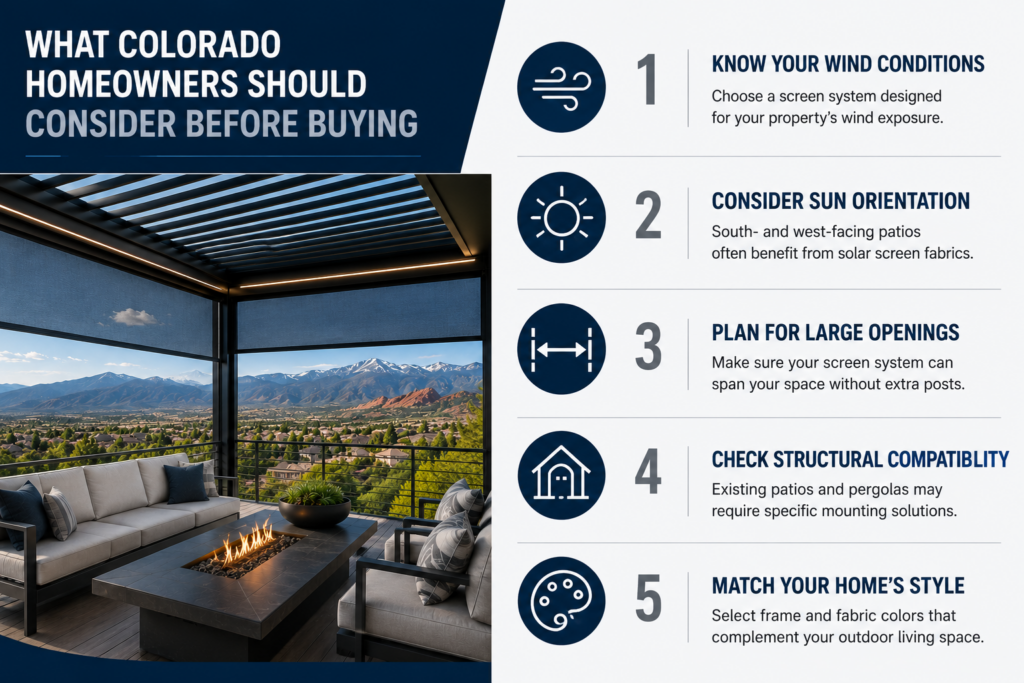
1. Wind Exposure at Your Specific Location
Colorado’s Front Range has significant microclimatic variation. A property in a low-lying area surrounded by trees may experience far less wind exposure than a hilltop lot in Monument or a west-facing deck in Falcon. Understanding your site’s actual wind environment helps determine which screen system and fabric weight is appropriate.
2. Orientation and Solar Load
South- and west-facing patios receive the most intense solar exposure in Colorado. A solar screening fabric may be more appropriate than a standard insect screen for these orientations. Your installer should assess the orientation and discuss fabric openness factors with you.
3. Screen Size and Spanning Capability
Large openings — a 20-foot pergola bay, for instance, or a wide covered patio — require a system capable of spanning that distance without a center post. MagnaTrack can span up to 30 feet wide and 20 feet tall with a single screen, which covers most residential applications without compromising the open feel of the space.
4. Integration With Existing Structures
If you’re adding screens to an existing structure, the installation team needs to evaluate how the screen housing and track will attach, what clearances are needed for the motor and roller, and whether any structural modifications are required. Quality installation matters significantly for long-term performance.
5. Fabric and Color Matching
Screen housing and fabric colors should complement your existing outdoor living space. MagnaTrack offers a range of powder-coat colors and custom color options, which means the hardware can be matched or coordinated with your deck, pergola, or home exterior.
Frequently Asked Questions
Can motorized screens handle Colorado’s wind gusts?
Yes — quality motorized screen systems designed for exterior use are rated for significant wind loads. MagnaTrack screens in particular use a patented magnetic track design that maintains screen tension during wind events and self-corrects if the screen shifts, which reduces the risk of damage and eliminates most service calls related to wind-related misalignment.
Do motorized screens work in winter in Colorado?
Motorized screens can extend the comfortable outdoor living season into shoulder months like October and early November, and potentially warm days in March and April. They are not typically designed to create a heated enclosure for true winter use, but combined with a patio heater, fire pit, or radiant heat system, they can make mild winter days significantly more comfortable.
Will motorized screens block my mountain views?
This depends on the fabric you select. Solar screen fabrics are available in varying “openness factors” — essentially, how much of the fabric is open weave versus solid. A 10% openness fabric provides more UV and heat blocking but slightly reduces visibility. A higher openness fabric preserves the view more while still providing meaningful sun and insect protection. Your installer can help you select the right balance for your situation.
How do motorized screens handle Colorado hail?
Screen fabrics are not rated as hail protection. During a hail event, screens should be retracted to protect the fabric. Smart integration with weather sensors can automate this, or screens can be manually retracted via remote or app before a storm arrives.
Do I need to remove my screens for winter storage?
MagnaTrack screens installed outdoors are designed to remain in place year-round. When not in use, they retract into a protective housing. The hardware components are built to withstand temperature cycling. However, it’s generally advisable to keep screens retracted during snow events to avoid weight load on the fabric.
How long does installation take?
Installation timelines vary by project size and complexity. A straightforward single-screen installation on an existing structure may be completed in a day. A more complex project with multiple screens integrated into a new pergola build takes longer. Alta Outdoor Living provides project-specific timelines during the consultation process.
What is the warranty on MagnaTrack screens?
MagnaTrack screens carry a 10-year warranty on the screen fabric and hardware, which is among the strongest warranties in the motorized screen industry.
Can I control my screens with my phone?
Yes. MagnaTrack screens are compatible with smartphone control and can also be integrated with home automation platforms. Remote control operation is standard, and app-based or voice-activated control is available depending on your chosen motor and integration package.
Making the Most of Colorado’s Outdoor Season
Colorado homeowners have invested significantly in their properties and their outdoor spaces. The irony is that many of those spaces sit unused or underused during conditions that a quality screen system would make entirely comfortable.
If you’re exploring motorized screens for your deck, pergola, or covered patio in the Castle Rock, Colorado Springs, Parker, Monument, Black Forest, or Highlands Ranch area, the conversation starts with understanding your specific space, your wind and sun exposure, and what outcomes you’re actually looking for.
Alta Outdoor Living works with homeowners across the Front Range to design and install outdoor living systems that hold up to Colorado’s climate and genuinely get used. If you’d like to talk through whether motorized screens are the right addition to your outdoor space, reach out to our team at (719) 414-2900 or visit us at alta-outdoorliving.com.